
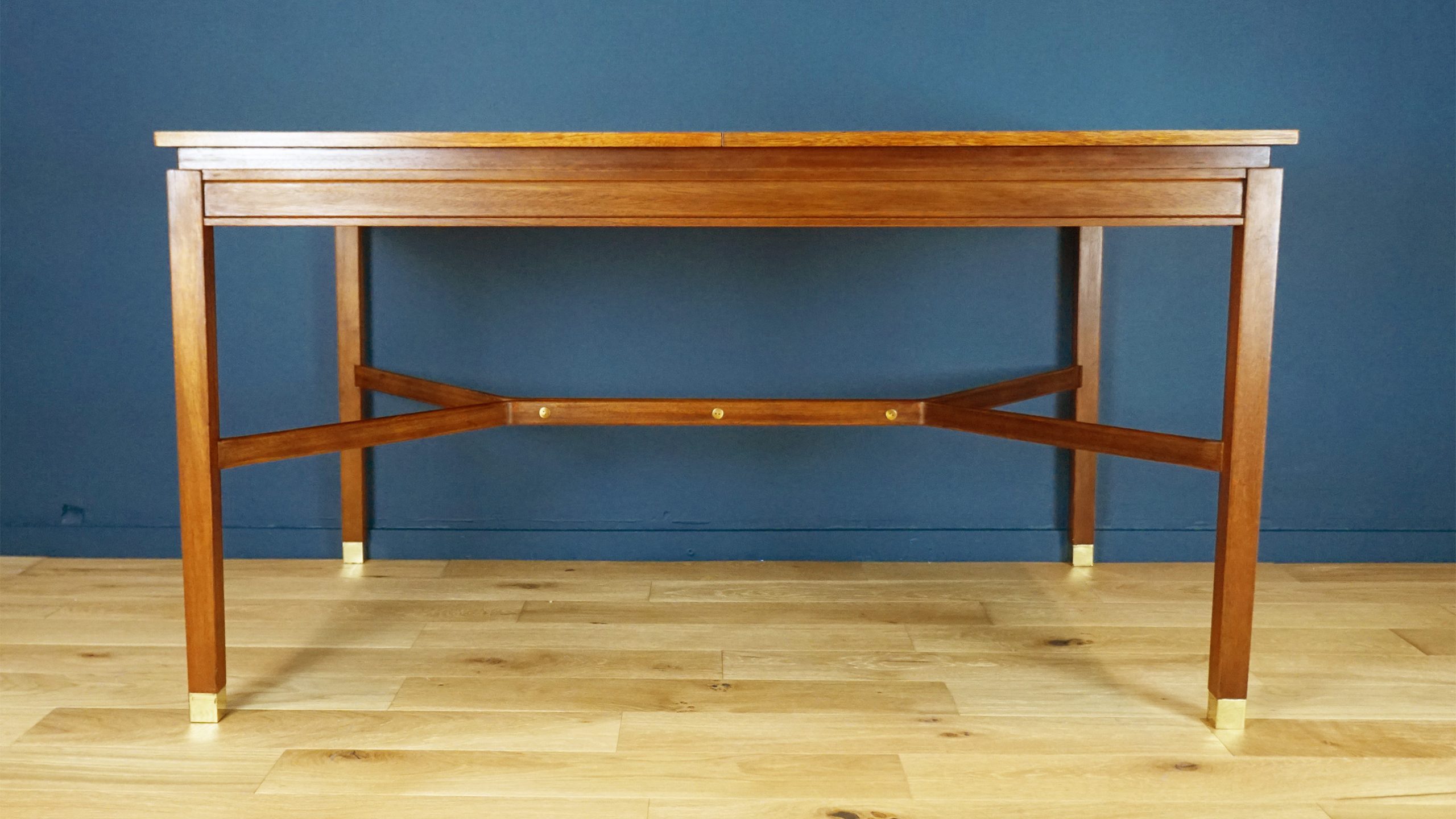
This dining table is a rare early example of G Plan’s Tola range, listed as Model 4305 in early 1960s catalogues. Produced by E. Gomme Ltd, it dates from a pivotal moment in British furniture history, when post-war design was shifting away from traditional domestic styling towards a more modern aesthetic shaped by Scandinavian and European influence.
E. Gomme’s contemporary brand, G Plan, was created to offer coordinated modern furniture for a new generation of homeowners, refining its identity through cleaner lines, simpler forms and a more architectural presence. The Model 4305 sits squarely within this transition. It retains the solidity and engineering of earlier E. Gomme production, while clearly pointing towards the cleaner, more confident mid-century modern identity that would later define G Plan.
Several design details distinguish this model. The table features an unusual bent-wood stretcher, shaped into a curved structural brace, introducing a sculptural quality rarely seen in more conventional British dining tables of the period. This is paired brass fixings, adds a subtle metallic accent that reflects G Plan’s growing interest in mixed materials. The table also bears an early E. Gomme ‘G Plan’ gold stamp, associated with the emerging brand’s first years of production.
This particular example underwent a complete restoration due to significant historic damage. The tabletop had developed severe water marking, compromising both its appearance and surface integrity. To resolve this, the table was fully stripped and refinished, removing degraded coatings and restoring clarity to the grain.
The contrast between the pre-restoration condition and the finished result highlights the difference between superficial refurbishment and design-led conservation. Rather than attempting to make the table appear factory-new, the work focused on material honesty, preserving the warmth, tone and authenticity that gives mid-century modern furniture its enduring appeal.
What ultimately sets the Model 4305 apart is not only its rarity but its historical position. It represents a moment when British manufacturers were negotiating identity, modernity and international influence, helping to define what would become the classic G Plan aesthetic. At Casta Blue, pieces like this are valued not only for their beauty, but for what they reveal about design evolution, manufacturing history and material craft.