
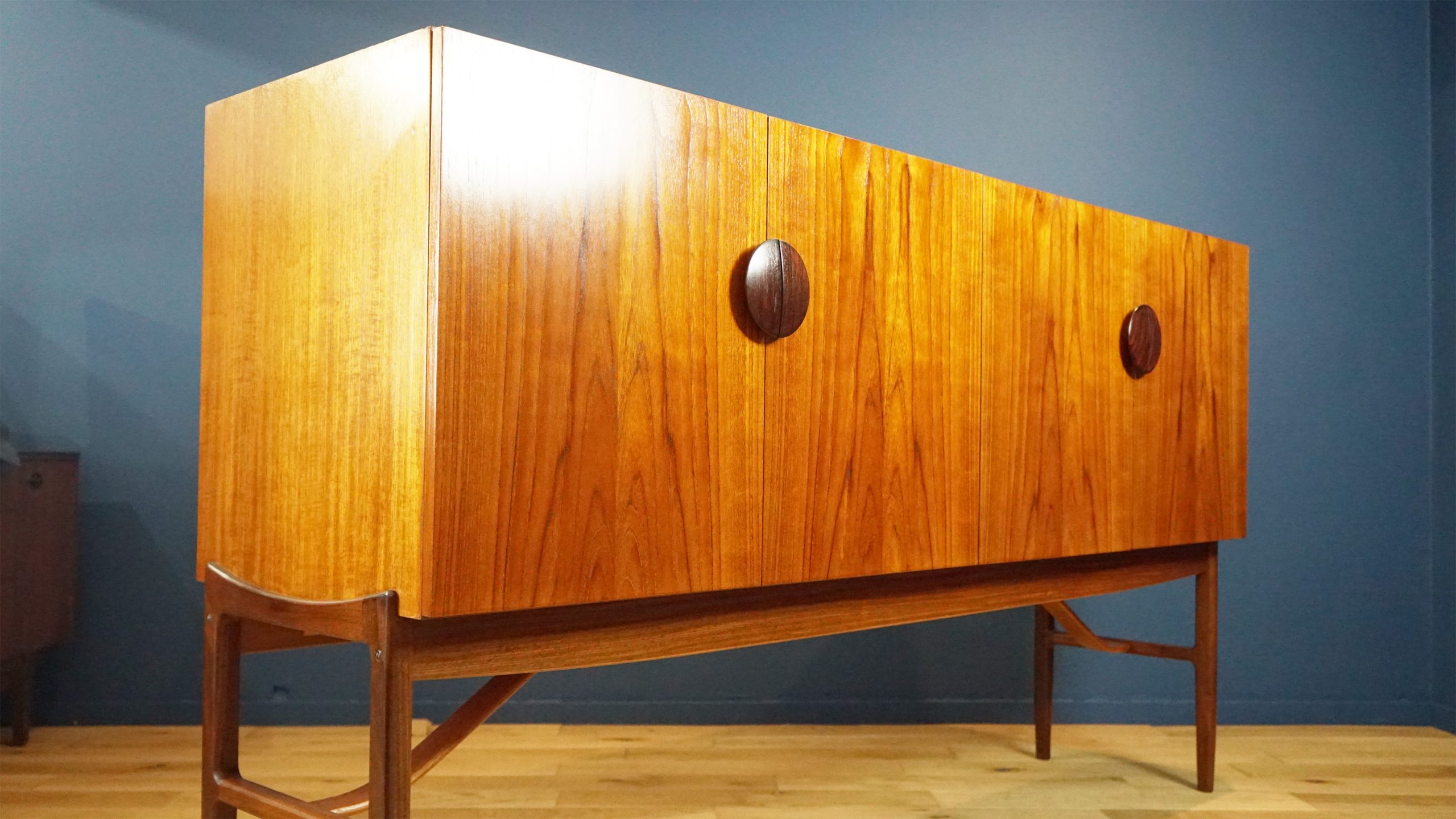
Designed by Ib Kofod-Larsen for G Plan’s Danish range, the Model 4060 sideboard stands among the most recognisable and collectible pieces of British mid-century modern furniture.
Produced in the early 1960s, it represents a moment when E. Gomme Ltd stepped beyond its mainstream output and embraced a more authentically Scandinavian design language — lighter in proportion, more sculptural in structure, and quieter in its confidence. The Danish range looked unmistakably modern, yet unmistakably British in its build quality and material integrity. Today, the 4060 is widely regarded as one of the defining pieces of that short-lived but highly influential collaboration.
Part of what makes this example so compelling is its rarity, particularly in Cornwall, where pieces from the Danish range surface far less frequently than in major urban centres. The design itself is instantly recognisable: four large doors with bold round rosewood handles, elevated on elegantly shaped legs and distinctive curved stretchers. Behind one of the doors sits a set of beautifully proportioned internal drawers, a quiet but telling detail that speaks to the intelligence of Kofod-Larsen’s design. The proportions are balanced and architectural, allowing the rich teak veneers to read as the true focus of the piece. In many ways, the 4060 embodies his design philosophy — functional, graceful, and timeless.
What elevates this particular sideboard beyond a desirable example to an exceptional one is the survival of its original G Plan promotional poster. This was carefully removed, preserved, and later reattached in its original position inside the door. Such ephemera is rarely preserved at all, as most were removed, lost, or damaged over decades of use. Its presence provides a direct link back to the piece’s original context as a new, aspirational product in the early 1960s British home. It adds cultural and historical value far beyond the sideboard’s visual appeal alone.
Given both its rarity and provenance, the restoration of this piece was guided by a preservation-first approach. Rather than seeking to make it look ‘as new’, the priority was to stabilise, conserve, and enhance what already existed. Original surfaces were treated with care, wear patterns were respected, and interventions were kept to the minimum necessary to ensure longevity. The aim was not transformation, but continuity — allowing the character of age, use, and history to remain legible while restoring clarity, warmth, and balance to the teak.
Projects like this underline why the Danish range continues to command such admiration among collectors. These were not mass-market pieces, but carefully considered designs that pushed G Plan into a more international design conversation. The Model 4060 remains a testament to that ambition — a piece that feels as relevant today as it did when first introduced. At Casta Blue, work on objects of this calibre is approached with both respect and restraint, ensuring that rare, well-designed furniture is preserved rather than overwritten, and allowed to continue its story with integrity.